Showing posts with label #ASD. Show all posts

Sunday, August 9, 2020

NB MLAs: NB's Adult Severe Autism Health Crisis & the Need for An Autism Village Network Treatment and Care Model


                   Sudden severe, migraine pain can accompany Autism   with Intellectual Disability  and Seizures.  

                       Members of the New Brunswick Legislature and NBers                            with Interests in Autism Disorder


NB's  Adult Severe Autism Health Crisis & the Need for An Autism Village Network Treatment and Care Model

In 2008 I was a member of the Autism Society NB when we drafted a submission to the NB government on youth and adult residential care and treatment.   Included in that submission was a statement that NB needed an adult autism residential care and treatment network including a centre for those most severely affected by autism and related disorders.  

In 2015 I helped organize a meeting with then Minister Cathy Rogers to discuss a detailed model of an Autism Village Network Proposal drafted by Professor Emeritus (Psychology) Paul McDonnell who also attended the meeting with me and parent Cynthia Bartlett. The meeting, as I perceived it was very positive, but nothing came of it, not even a substantive meaningful response. 

In August 2018 members of the Autism Advocacy New Brunswick group  attended in Fredericton on a warm October afternoon and voted overwhelmingly in support of  the Autism Village Network - Satellite Model drafted by Paul McDonnnell Professor Emeritus (Psychology).    

In April 2019 autism parent advocate Cynthia Bartle & I met with then social development minister Dorothy Shephard  and presented the New Brunswick Autism Spectrum Village proposal which built  on those successes enjoyed by NB children and youth today. The proposal called for a network of enhanced autism group homes built around a Fredericton based centre that would provide training, oversight, continuing education,  and residential care and treatment for those most in need.  A copy of the proposal is included herewith. 

Studies and reports such as the Autistica UK Personal Tragedies, Public Crisis have documented the reality of severely  reduced life expectancy on the autism spectrum with those with autism and intellectual disability living, on average 30 years less than the general population and those with autism without ID living 9 fewer years on average. Epileptic seizures are the primary trigger for the early death of the 40-50% of persons on the autism spectrum who also suffer from  intellectual disability. 

Despite the severity of the health crisis facing nearly half of the autistic population who also suffer from epilepsy and seizures nothing has been done. In fact I was informed by several MLAs that any response to our concerns about adult autism health care would probably have to wait  the presentation of the "Hutch" Report an initiative of the Autism Connections Fredericton executive director Rick Hutchins who has no family experienence caring for adults with atuism nor any professional or academic education with autism disorders.  He appears to have  friends in government from his lobbying career and he appears to be a close friend also of Paul McDonnell Ph.D.  While Professor McDonnell wrote the 2015 Report and attended our meeting with then Minister Rogers he did not speak out as an advocate as he did in 2015 and earlier in 2010. The allegedly provincial focus report on adult autism needs does nothing to explain the serious challenges facing adults with severe autism, intellectual disability, and seizures including migraine  There is no attempt, in the Hutch Report to address the severely reduced life expectancy of those who suffer from ASD, Intellectual Disability and Epilepsy. The latter also includes sudden onset migraine attacks which can be mistaken for bad behaviour. Time that many parents do not possess in abundance has passed until the Hutch Report was pushed onward.  The only positive aspect of the Hutch Report was for the benefit of the Autism Connections Fredericton Centre with a recommendation for ... increased funding for ACF. 

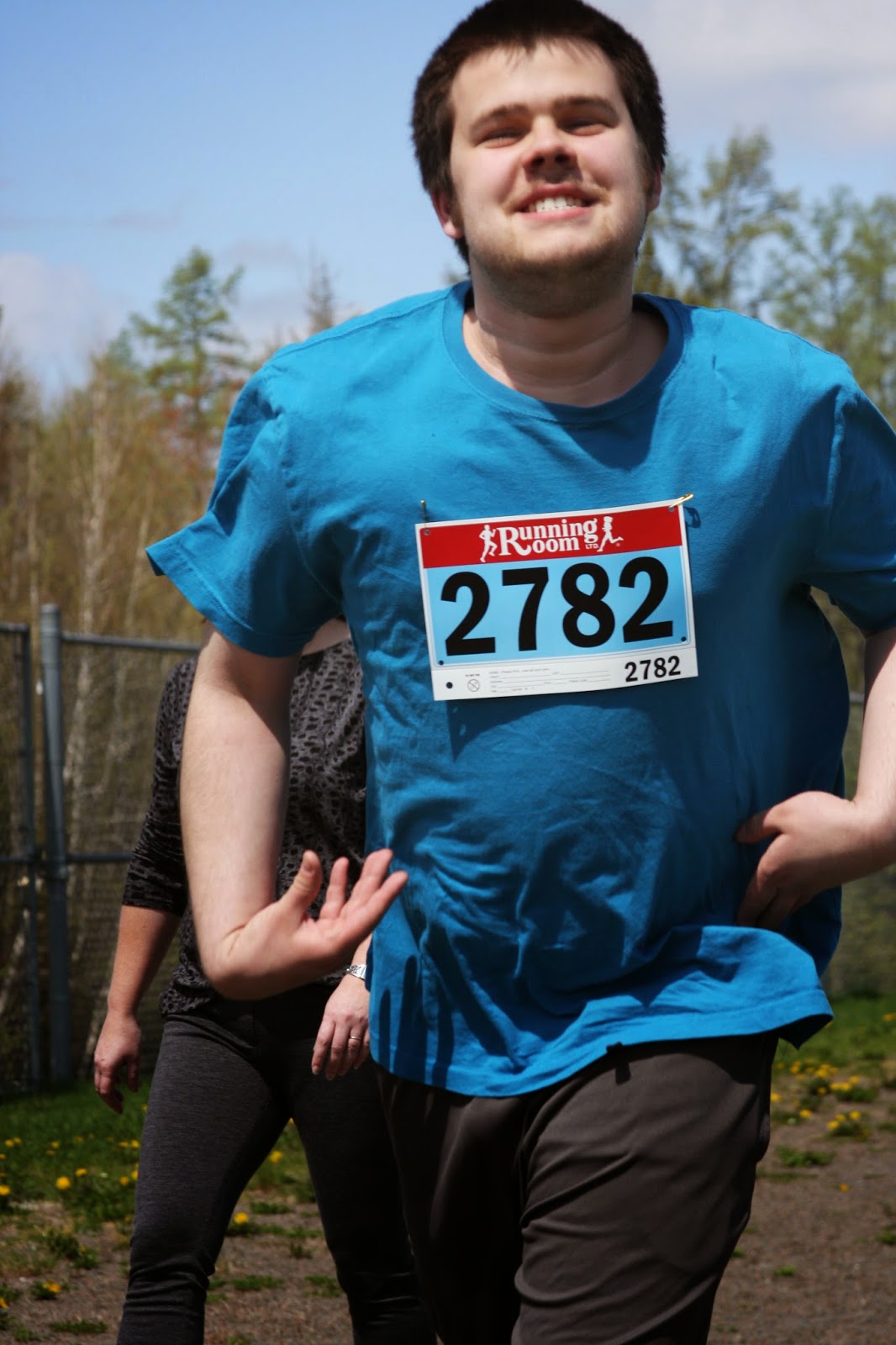
Unlike Mr Hutchins I  have held my son in my arms as he has fallen into tonic clonic seizures and seen him fall to the floor at the cash at the Superstore on Main St in Fredericton New Brunswick where the staff, fortunately were very well trained in assisting me with my son's seizure at that time.  I have seen him suffer abruptly in severe migraine pain. I have included pictures I was taking of him on the swings happy as could be seen before and during rapid onset migraine pain.  My camera was on an athletic setting which captured the movements very quickly as it would for a sporting event. 
 
I ask you to review carefully the 2015 proposal for the NB Autism Spectrum Village - Satellite Model, drafted by NB autism expert Paul McDonnell with input from parent autism advocates who fought for the early autism intervention program, the autism trained aides and resource teachers in our schools and the reversal of the decision to close the Stan Cassidy Autism team.  The Autism Society New Brunswick drafted a similar model, albeit less expert and professional  than that of Professor Emeritus (Psychology) Paul McDonnell after conducting a survey of NB families in 2008. 

The Ombud has produced a report with which you are all familiar which speaks to the very unhealthy conditions at the Restigouche.  A centrally located centre for severe autism care and education of those who provide care in special care homes around NB to autistic adults is essential and without  such a network it is my opinion as a long time autism advocate, a father of an adult son with severe autism and a practicing lawyer that the harm that has endured will continue.  As I grow older I do not see a system in place to provide care for my adult son with autism, intellectual disability and epilepsy a common and very  serious life threatening combination on the autism spectrum.  

In my humble opinion, both personal and legal, I see neglect on a scale that violate the United Nations Convention on the Rights of Persons with Disabilities. My 24 year old adult son lives with limited communication skills, migraine pain and epileptic seizures.  I have to keep on fighting until I can't.  I understand you all have many other issues  especially now in the COVID era.  

The Hutch Report added nothing of value for those with severe autism, intellectual disability,  epilepsy and a 30 year reduced life expectancy.

 I hope that you  end the delay and start working on the proposal as written by Paul McDonnell in 2015.

Respectfully,,


Harold L Doherty, BA, LLB
Conor's Dad
Queen Elizabeth II Diamond Jubilee Medal Recipient - Autism Advocacy


The New Brunswick Autism Spectrum Village - The Satellite Model


It Takes a Village to Support Adults with Autism Spectrum Disorder

NEW BRUNSWICK SATELLITE MODEL FOR
ASD SERVICES FOR ADULTS

New Brunswick has made great gains in providing early intervention programmes for children with autism spectrum disorder (ASD), a neurological disorder, and is currently developing a comprehensive rogramme to train teachers and teacher assistants within the province to work in an effective manner with our students.  To date, no initiatives have addressed the needs of adults. Once a student reaches the age of 21 years, there are no services, no supports, and the entire burden of support and care falls upon parents and family.
It is therefore imperative that New Brunswick establishes an Autism Treatment and Residential Centre.  The centre should be situated in Fredericton so that it is physically close to regional autism expertise at the UNB-CEL autism program and the Stan Cassidy Centre.  The Centre would provide treatment for all autistic adults who are too old for treatment at the Stan Cassidy program and permanent residential care for the most severely autistic some of whom have been sent to the Spurwink Facility in the State of Maine and to the Restigouche Regional Psychiatric Hospital in
Campbellton.  Autism specific group homes around the province are required with autism trained staff and oversight from the Centre.  In this sense, the model proposed could be characterized as a “satellite” model in which the centre in Fredericton would be linked directly to a number of satellite homes around the province.  Medical issues commonly associated with autism disorders including epilepsy and depression would also be treated in the context of persons suffering from autism and the extra challenges it presents to treating those common co-morbid conditions.

The scope of the problem can be appreciated when one considers the fact that autism spectrum disorder is the single largest disability across Canada. Current estimates of the number of individuals diagnosed with autism spectrum disorder range from the recent estimate by the Center  for Disease Control in the USA of 1 per 68 persons1  to slightly more conservative estimates around 1/1602. This means that the incidence of autism spectrum disorders ranges from 4700 to 11,100 individuals in New Brunswick.  It also means that services are needed for roughly 3,300 to 7900 are
in the age range between 22 years and 75 years.

1CDC, Prevalence of Autism Spectrum Disorder Among Children Aged 8 Years — United States, 2010,
March 28, 2014 / 63;1-21
2Elsabbagh M, Divan G, Yun-Joo Koh YJ et al.. Global prevalence of autism and other pervasive
developmental
tism Res. 2012;5(3):160–79

One can also understand the scope of this problem by looking at the following list of challenges  that are faced by parents of an adult son or daughter with autism spectrum disorder. Because the range of disability within ASD is so broad, we present a wide range of very typical challenges that
families face.

• Cessation of Educational Opportunities – Once a student leaves the school environment in which they have supported learning opportunities, there are few if any places a student can go to advance  their learning. Most of these students could not avail themselves of post secondary learning opportunities, as they require a significant amount of scaffolding to enable them to succeed.  At age 21 most typical students have a variety of skills and are reasonably literate.  Even they need ongoing training and many even most do some form of additional education or job training.  This is  not possible for the majority of the young people with ASD.

• Unemployment – The rate of unemployment among all levels of persons on the spectrum is close to 100%.  Some do manage to find limited employment opportunities through the services of centres such as Fredericton’s Jobs Unlimited.  However, the majority of persons on the spectrum are not successful.  It is believed that people with Asperger’s (the most functional of persons on the spectrum) have a 75-85 percent unemployment rate.  Autism Speaks estimated that 85 percent of
adults with autism in the United States are currently unemployed or underemployed. Among young adults between 21 and 26 years old, only 50 percent have ever had a paid job outside of their households. This means that parents may have to support their son or daughter for most of their lives.   There are some government supports such as the disability tax credit and the disability retirement savings plan but we know that not all persons with a diagnosed condition will qualify for support and even if they did, the support is minimal in comparison to a living wage.  The 40% to 50% of persons with ASD who also have intellectual limitations are most likely to remain totally  unemployed although a few may find very limited opportunities through non profit community agencies.  The half of the ASD population with relatively higher intellectual skills will also have very limited employment usually because of social challenges.

 Regression of skills – All professionals who work with persons with ASD have seen the loss of skills that results from a lack of stimulation that comes from learning in functional social contexts.   In fact, several years ago, UCLA Psychologist, Ivar Lovaas, did a study in which individuals who had increased their IQ scores in a three-year treatment programme, lost almost all of the   3 functional skills (e.g., language skills, self-help skills, and cognitive skills) they had learned after three more years of no educational programming. We experience these kinds of regression frequently when an individual passes from a relatively stimulating learning environment to living at the family home without a planned curriculum.  Early intervention is the best way to provide long lasting learning but not all individuals will succeed sufficiently to be immune to regression of skills once formal training stops.

• Lack of respite Care – There are very few services available to provide respite to parents or guardians of individuals on the spectrum.  In addition, even fewer services exist (if any) that have staff that re appropriately trained.  This is a crucial service needed by almost all families affected. Parents with adults on the sp ctrum can be in very desperate need for respite care. In some cases, the individual with ASD will require care 24 hours a day and 7 days a week. Depending on a family ‘s circumstances, this may mean that either a father or a mother will need to be at
home with the child at all times. In other circumstances, the needs may be different. An individual  may not require as intense care but may present with many challenging behaviours and the parents
may need short-term breaks.

• Lack of opportunity for recreation – Recreation has been shown to be an effective treatment for  many of the challenging behaviors we encounter with individuals on the spectrum.  In addition,there is research to show that individuals with developmental disabilities tend to be less fit in general and tend to have more illnesses.  In large measure this situation arises from lack of suitable recreational and vocational services and far too much unstructured, idle, time.

• Restricted Social Lives – Individuals with a diagnosis are by definition less interested in social interactions and more likely to seek solitary pursuits. The major disability in autism spectrum disorder is a social disability.  Left on their own this pattern of behaviour intensifies and we know that increasing isolation from healthy social interactions can lead to major challenges.  With supports in employment and in other kinds of social interactions, persons with ASD can enjoy and benefit from social contacts.

• Mental Illness – The research is clear.  Individuals with ASD are more likely to be affected with co-morbid forms of mental illness such as depression.  The factors that contribute to the high percentage of mental illness are social isolation, lack of social supports in meaningful activities, lack of education, and lack of meaningful work and recreational activity.

• Behavioural Challenges – We need to point out that access to regular society (employment, residential living, recreation, etc) requires a minimum of compliance and an absence of aggressive behaviours.  Many individuals with more severe forms of ASD have some level of behavioural challenge.   These behaviours are almost always caused by poor communication skills and inadvertent reinforcement of problem behaviours by caretakers who do not have sufficient training to handle these kinds of behaviours.

Summary of the Problem:  It is clear from the description above that families with an adult child can be faced with overwhelming challenges and stress related to providing the very best services they can to their son or daughter.

Solutions:  The needs of individuals and families and the scope of the problem described above can be mitigated or overcome by our proposed centre. 

Our proposed centre would not be a single building as such but rather a satellite network of homes, apartment-styled buildings and other facilities integrated as much as possible within residential neighborhoods. The design is explained in more detail below.  Our approach will be innovative and uniquely designed to suit families in the New Brunswick situation.  The key principles for this proposed village are that all programmes and services are as much as possible evidenced-based, that the centre be dynamic in the sense of being flexible enough to meet diverse needs.  It also needs to have a meaningful connection to the NB community and that includes accessibility of services and easy accessibility for families to maintain a connection to the clients in the centre (or centres).

Comparative Analysis: There are some existing facilities that serve adolescents and adults across Canada, in the USA and in Europe.  For example, in the Toronto region there is a group called Kerry’s Place that offers evidenced based services for adults.  New Jersey has some outstanding private facilities and in particular the model developed at Princeton Child Development Centre is called Mountain View.  There are no services in New Brunswick that are remotely comparable to these  services.  Currently, when we have an adult with ASD that is unmanageable in a home or in existing special care homes, they are sent to a facility in Maine called Spurwink . The facility in Maine is a fine service but it costs the taxpayers thousands of dollars and is far away for the client’s family.

THE NEW BRUNSWICK “SATELLITE” MODEL: We have proposed a
"satellite" model that would provide residential and other adult services in several regions around NB but also would have a home base located in Fredericton.  In general, the best way to provide the physical spaces and to find appropriate staff is to make use of existing facilities but offer upgrading and training.  There are a number of options available such as providing training and other upgrades to selected group homes in the province. In addition, one can look at working with selected developers to create some residential complexes for both typical individuals and persons
with special needs of various kinds.

Possibly, an autism centre can be created at UNB or in association with the Stan Cassidy Centre.   The details of the physical spaces need to be planned carefully but the guiding principal is to provide dynamic services for all adults involved either as residents or as day users of the facilities.  As well, we want facilities that serve the diverse needs of the adult population.

SERVICES OFFERED BY THE NEW BRUNSWICK MODEL:

In a future draft of this proposal we will provide a detailed description of the kinds of services that we envisage.  These will include at a minimum residential services, sheltered work and vocational services, ongoing training in life skills and personal care, treatment of behavior problems, recreational skill development, respite care for families, training of families in skills needed to maintain their son or daughter in a home setting, and social skill development. There are clearly levels of support needed and the following is a list of some of the more obvious levels. Over the course of their lives, individuals may move from level to another.

Friday, September 20, 2019

Parents of Children with Autism AND Intellectual Disability, Unlike Autism Researchers, Do Not Exclude Our Children

Recent studies have documented an alarming fact.  Alleged "Autism" studies for the most part, 94% , do not include subjects who suffer from autism AND intellectual disability even though approximately 50% of persons with ASD also have an Intellectual Disability.  Fortunately for our children, young and adult, who suffer from their version of autism SPECTRUM disorders most parents will not exclude them. Apparently ill informed, ignorant parents know something about our autistic children that autism researchers do not.

 A couple of pictures below show a glimpse of my son's autism suffering and several others show the joy he has experienced and brings into the lives of his parents.  parents who provide care and love.


The swelling from a hand bite Conor inflicted on himself in high school when the phone in an office  near where Conor was located kept ringing because no one was there to answer it.  When he was in grade school, in a NB ""Inclusive"" classrom he used to come home nearly every day with bite marks on his hands.  When he was moved to an empty room where he studied with the assitance of an  autism trained aide the biting stopped. Night and day. 


In this picture above Conor was enjoying a Saturday morning swing on his old school grounds, beautiful, mild, quiet day.  Suddenly he began smashing his head in obvious pain. I had worked on a summer job with a fellow who suffered from  seizures and displayed such pain on occasion and sought medical attention for the possibility Conor was suffering from seizures which he was.  Several grand mal/tonic clonic seizures later Conor was confirmed with epilepsy and began seizure medication.  As I now know Conor's epilepsy/seizures are common for persons with autism and ID.

Despite the challenges faced Conor has been happy and has brought great joy to those who know him. In the pictures below Conor's love and joy is clear and attributable to him. His parents, if I may say, know a little bit about what it takes to assist him in having a happy life,  and unlike researchers we will not cut and run - we will stay the course. We know our children better than researchers who do not study them but exclude them.


Thursday, April 19, 2018

FOOL US ONCE ... SHAME ON YOU PM TRUDEAU! MEDICARE COVERAGE FOR AUTISM NOW!

SHAME ON YOU PM TRUDEAU!

The Liberal Party of Canada passed, with strong support, a resolution calling for Medicare Coverage for Autism in 2016 but the Liberal PM of Canada Justin Trudeau refused to act on it and instead spends $20 million dollars for 2 "autism web sites". Autism advocates and political supporters have fought for medicare coverage for autism and a REAL National Autism Strategy since 2003 led by MP's Andy Scott, Peter Stoffer and Shawn Murphy. Then in Winnipeg 2016 it looked like Medicare coverage for autism would soon happen when the Liberal Party of Canada, which forms the Government of Canada met for a national convention and passed a solid Medicare Cover for Treatment of Autism Resolution E-03. Trudeau fooled us though as he obviously had no intention of acting on his party's resolution.


Tuesday, August 15, 2017

Think Twice Before Leaving An Autistic, Epileptic, Intellectually Challenged Person Unsupervised While Bathing


Left: Connor Sparrowhawk an autistic, epileptic 18 year old with learning difficulties 
who drowned while suffering a seizure during an unsupervised bath in a UK care facility. 

Right: Connor Sparrowhawk's mother Sara Ryan who testified it never crossed 
her mind that her son would be left to bathe unsupervised


A UK mother has testified during a tribunal review of a Doctor's responsibility,  and the role his performance might have played in the death of 18 year old Connor Sparrowhawk an 18 year old autistic, epileptic youth who drowned when he suffered a seizure while taking a bath unsupervised in a UK NHS care facility.  The linked article from Oxford Mail states that Connor Sparrowhawk also suffered from a learning disability.

The doctor involved has admitted 30 professional failures including obtaining his history of symptoms, failure to keep medical records etc. which apparently resulted in Connor's  unsupervised bathing.

Connor Sparrowhawk's mother, Sara Ryan,  is reported to have fought back tears as she testified:

"We just assumed he was being supervised in the bath. It was not something that came to my mind. It was almost one-to-one support on the unit.
"It had a whole team of specialist staff and there were five patients. It just never crossed my mind."
Our son suffers from severe Autism Disorder, profound Intellectual Disability and epileptic seizures including tonic clonic or grand mal seizures.  He has never been left to bathe on his own even prior to his first observed tonic clonic, epileptic seizure.  
When our Conor, now 21,  goes to the bath one of us is with him.   We do not want to lose him.

Sunday, July 30, 2017

Worries About the Future for Family Members of Autistic Adults


Very little is known about autism and adulthood. Family members are often the primary support for autistic adults and frequently express concerns about what the future will hold and what support will be available for their relative.

 The above quote is from the JADD abstract below.  It hits one of the greatest autism issues square on the head. The future of autistic adults once family members can no longer provide the care they need in varying degrees.


The Restigouche Psychiatric Hospital located on NB's northern border
 far from most families in NB, and far from the autism expertise which has
 been developing in centrally located Fredericton. It is very difficult for families
 in the south to travel to Campbellton and back on a regular basis to maintain
 ties with severely autistic adult family members.

Parents in New Brunswick fought hard for early autism services in NB and for autism trained teacher aides to work with our children in our schools but when it comes to adult autism residential care and treatment the government has not budged.  Adults with severe autism requiring long term residential care and treatment are still sent, for purely political reasons, (as documented re the youth mental health facility)  to the northern NB border, to the  Restigouche Psychiatric Hospital in Campbellton, as far as possible from families, the overwhelming majority of whom live in central (near NB's autism expertise) and southern New Brunswick. The travel time particularly in winter or during summer construction seasons renders maintenance of family relationships sent to the Restigouce hospital extremely difficult.
--------------------------------------------------------------------------------------------------------------------------


Journal of Autism and Developmental Disorders

Brief Report: What Happens When I Can No Longer Support My Autistic Relative? Worries About the Future for Family Members of Autistic Adults

  • Renske Herrema
  • Deborah Garland
  • Malcolm Osborne
  • Mark Freeston
  • Emma Honey
  • Jacqui Rodgers
  1. 1.
  2. 2.
  3. 3.
  4. 4.
  5. 5.
  6. 6.
Brief Report


Abstract

Very little is known about autism and adulthood. Family members are often the primary support for autistic adults and frequently express concerns about what the future will hold and what support will be available for their relative. 
120 family members of autistic adults completed an online survey exploring concerns about the future for their relative. The most endorsed concerns were “their needs won’t be met” (77% worried weekly), “whether they will be happy” (72% worried weekly) and “who will care for them” (58% worried weekly). The results highlight the importance of implementing structured and timely support through collaboration with governmental policy, local commissioning and communication with charities to help prepare family members and their autistic relative for the future.

Sunday, June 4, 2017

Conor Hits The 21 Wall This Friday, June 9 When School Days End


Conor Doherty September 6 2010 the Day Before His Full Transition to High School. 
Conor has loved his school time and we thank everyone who has contributed to his 
school experience as June 9, his last day in school, approaches

Transitions are challenging to our severely autistic son Conor.  Conor has been suffering from serious  anxiety attacks including earlier this morning at 5:45 am. The source of his anxiety has been present for most of the school year once Conor knew this would be his last year in the school system.  He loves school and his last day will be this Friday, June 9 and Conor knows it.

That does not mean that the challenges can not be overcome with planning, effort and time.  The picture above was taken September 6, 2010 the day before Conor began school at Leo Hayes High School.  Planning for his transition form Nashwaaksis Middle School to Leo Hayes High School actually began during his last year of middle school meeting with education aides who would be working with him and visiting Leo Hayes HS as we did in this "day before" picture.

Conor had difficulty in Grade school when he was in one of NB's "inclusive" classrooms where he was expected to learn while most of the kids were being instructed at a different learning level and without sensory challenges experienced by Conor.  Once we were able to convince education officials to remove Conor to a quieter learning location outside the mainstream classroom he was happy, and has been happy, ever since.  His disability challenges were accommodated outside the regular classroom thus allowing his inclusion in grade, middle and high school.

Conor has also shared many events especially swimming and including gym, daily lunch and end of day time at the LHHS resource center.  In an environment where his needs have been accommodated outside the mainstream classroom Conor has prospered and has absolutely loved his time in school, to the extent that he is not looking forward at all to June 9, next Friday when he ages out.

We are hopeful that Conor will adjust.  We have had meetings with Jobs Unlimited in Fredericton and are impressed by what we have learned.  It is hoped that Conor will start with Jobs Unlimited on June 12 2017 or as soon thereafter as possible.  We are optimistic. In the mean time though I would like to post a few  of the many  moments which Conor has enjoyed  throughout his school years:


Monday, May 1, 2017

There is More to Real Autism Awareness than Pretty Blue Lights - 4 Years Ago We Almost Lost Our Buddy, Our Autistic Son Conor


Conor at the Intensive Care Unit of the Doctor Everett Chalmers 
Hospital, Fredericton, April 2013 when his life was at serious risk
from an adverse reaction, Rhabdomyolisis, to his seizure meds.

April, Autism Awareness Month has come and gone and to my knowledge little to no real awareness has yet been raised about the serious risks faced by those with autism spectrum disorder particularly those with intellectual disability and in much higher rates than among the general population ... seizures and the medications to treat seizures.  4 years ago as I was reminded by a Facebook reminder notice we almost lost our autistic son Conor to an adverse reaction ( a condition which was diagnosed by the treating hospital ICU team as Rhabdomyolisis)  to his seizure medication.  Conor's conidtion fits the model described in the following BMJ article.  Severely autistic, combined with learning difficulties which also fits him with the very high 20-40% of persons with autism who also suffer fro epilepsy.  The harsh reality staring Conor and all of us who love him is that persons in that group severe autism, learning difficulties and epilepsy die as much as 30 years sooner.   Not the type of autism awareness you generally hear about in the blue light autism is beautiful blend of autism "awareness".

People with autism die 16 years sooner on average than they otherwise would, and those whose autism is combined with intellectual disability die 30 years sooner.  Death comes earlier to autistic people, whatever the proximate cause. But epilepsy, which is diagnosed in 20-40% of autistic people, is a major cause of death, especially in those whose autism is severe and combined with learning difficulties. Among those who are autistic but with less severe symptoms, suicide is a common cause of death, especially among women. 


People with autism die 16 years earlier on average,says charityHawkes, Nigel. BMJ : British Medical Journal (Online); London352 (Mar 17, 2016)


"Conor Is Safe Now But We Almost Lost Our Buddy: THANK YOU To ALL Who Saved Him!

 http://autisminnb.blogspot.ca/…/conor-is-safe-now-but-we-al… In mid-April, pursuant to a neurologist's advice, we started Conor on Lamotrogine, an anti-eleptic drug which is reputed to have benefited many people suffering from seizure activity. Hours after receiving his third dosage Conor suffered his second Grand Mal seizure, that we know of, since his first in November 2012. Last week he became extremely drowsy and last Friday April 26, 2013, our family doctor recommended we reduce the dosage (the neurologist is out of town until May 13, 2013). Later, early Friday evening Conor's condition worsened noticeably and a rash had developed. Rash development is a known warning sign of a negative Lamotrogine reaction and Conor was taken to the DECH (Doctor Everett Chalmers Hospital) emergency where he received immediate attention and transferred to the Intensive Care Unit, the ICU. Conor's reactions have been very serious with risks in several key categories including risk to his kidneys and liver. Thanks to our family doctor and the excellent care and attention of the Emergency and ICU personnel our Buddy is still with us. Without their help he probably would not be. Conor is still in the ICU but is expected to transfer to pediatrics in the next day or two. He has improved dramatically.

To everyone involved with protecting and saving our buddy Conor his Mom and Day say THANK YOU VERY MUCH, THANK YOU!

PS. We can hardly wait for the phsyio and other necessary recovery interventions to give us back our Run, Jump, Fly Boy"

Autism awareness should create awareness of the serious, life threatening conditions commonly associated with autism disorders and limiting life expectancy by 16 to 30 years

We were fortunate to have access to excellent medical care and attention from the ICU and Emergency teams, their supporting staff and our family doctor,  To all of them I say once again THANK YOU FOR SAVING OUR SON's LIFE. 

To everyone involved with "Autism Awareness" events though I say start teaching the public about all aspects of autism disorders including some of the most frightening realities. 

Wednesday, April 5, 2017

Medicare for Autism NOW! Open Letter to Prime Minister Trudeau


FOR IMMEDIATE RELEASE. PLEASE SHARE AND DISTRIBUTE WIDELY

Medicare for autism Now! Society
Suite 425, 1489 Marine Drive
West Vancouver, BC                                            
V7T 1B8
 
April 2, 2017                                                                                                          
“OPEN LETTER”

Rt. Hon. Justin Trudeau, PC, MP                                                              
House of Commons                                                                                      
Ottawa, Ontario
K1A 0A9

Dear Prime Minister:

Today is “Autism Awareness Day”, when some suggest we should celebrate this neurological disorder as just another way of being. This is bizarre and offensive in equal measure.

Last May, delegates to the Liberal Party of Canada’s national convention, held in Winnipeg, recognized the right way to respond to this national epidemic of staggering proportions when they overwhelmingly passed a priority health-care policy resolution calling upon the Government of Canada to work with provinces and territories to include under our supposedly universal MEDICARE plan science-based treatment for autism spectrum disorder (“ASD”), specifically Applied Behavioural Analysis. A copy of the resolution is enclosed. This initiative was assisted and encouraged by our not-for-profit organization, the Medicare for autism Now! Society (“MFAN”).

To date, almost one year later, you and your Cabinet colleagues have failed to do what your extra-parliamentary party has instructed and literally hundreds of thousands of Canadians desperately need. This inaction is in spite of the Government of Canada having concluded “Health Accords” with every province except Manitoba, most of which purport to involve an emphasis on increased federal funding for mental health issues. Why do you and your colleagues continue to ignore the plight of persons afflicted with ASD and their families, and continue to deny appropriate funding for what our courts have long ago ruled to be the medically necessary treatment of this often devastating neurological disorder?

According to the report “PAY NOW OR PAY LATER, Autism Families in Crisis” released by a Senate committee in March, 2007, the number of ASD diagnoses was then one in 166, which indicated that, fully ten years ago, there were some 48,000 children, aged 19 and under, and 144,000 adults living in Canada with this condition.

Today, in North America the incidence rate of ASD is estimated by the world-renown Centers for Disease Control, in Atlanta, to be one in 68. We are reliably advised that this ratio translates into roughly 129,000 children and 386,000 adults living in Canada with ASD. Clearly, it is long past time for action, as has been undertaken in the United States where, at last count, fully 44 states require health insurance providers to include in their policies coverage for science-based treatment for ASD, specifically Applied Behaviour Analysis.  No further consideration should be given to expensive proposals calling for yet another self-serving bureaucracy and perennial gab-fests, such as the one recently put forward by the Canadian Autism Partnership Project. As a former premier of Ontario, and interim leader of the Liberal Party of Canada, Hon. Bob Rae, said, in his letter of April 21, 2016 endorsing the enclosed resolution, “It is long past time to end this unacceptable discrimination by including treatment for this neurological disorder where it rightfully belongs in our country’s health-care system.”

In February, 2016, in talking about old age pension entitlements, you said, “How we treat vulnerable people in our society is very important.” We agree. There can be few more vulnerable people in Canada today than those who suffer from untreated, moderate to severe ASD. In the mandate letter you sent to Health Minister Jane Philpott, upon her admission to Cabinet, you stated, inter alia, “It is my expectation that you will engage constructively and thoughtfully and add priorities to your agenda when appropriate…We will be a government that governs for all Canadians…As Minister of Health, your overarching goal will be to strengthen our publicly-funded universal health care system and ensure it adapts to new challenges.”

We sent an e-mail to the Health Minister, on November 20th of last year, asking her what steps were being taken to implement this long overdue and urgently needed policy change. To date, we have yet to receive an acknowledgement of our communication. We have had a similar lack of response from Finance Minister Morneau to a letter, dated June 22, 2016, we sent him respecting this issue. A copy of each communication is enclosed. So much for a government committed to openness and engagement.

What is it going to take to get you and your colleagues in the Government of Canada to recognize the seriousness of this health-care crisis (identified as such by the Senate ten years ago) and to respond by doing the morally right and fiscally responsible thing through ensuring appropriate funding within MEDICARE for the science-based treatment of ASD, specifically Applied Behaviour Analysis?

Yours sincerely,
Jean Lewis           David Marley,
Director, MFAN    Director, MFAN